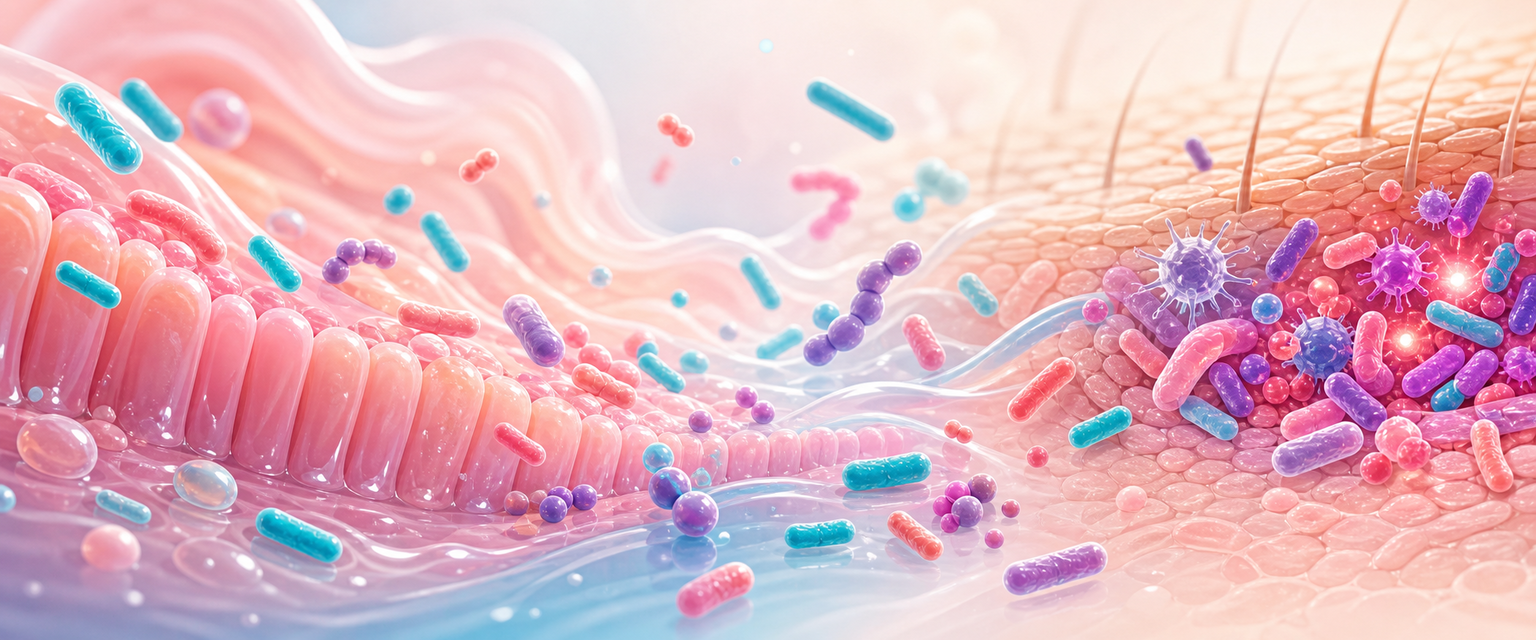
Micro-Organisms Affecting the Child's Genital Tract
Start from one idea and let everything else hang off it: the prepubertal vulva is an exposed, lightly defended surface that has not yet been switched on by oestrogen. That single fact explains why children get vulval symptoms, which organisms turn up, why most cases are not true infections, and why the few that are can be a child-protection emergency.
The adult vagina is an acidic, oestrogen-primed, lactobacillus-fortified niche. The prepubertal vagina is none of those things. It is hypo-oestrogenic, the epithelium is thin, there is little glycogen, lactobacilli do not dominate, the labia are flat and the vulva sits a short distance from the anus. So the child's vulva behaves more like ordinary thin skin near a source of faecal contamination than like the self-cleaning adult vagina. For this reason non-specific vulvovaginitis is common, Candida is not the default diagnosis, and adult syndromic discharge algorithms do not transfer to children.
The Primary task is to understand the microbiological setting and the red flags. Most children with vulval irritation have an irritant, hygiene, dermatological or non-specific bacterial problem. A smaller group have a specific pathogen, a vaginal foreign body, pinworm, urinary infection, a dermatosis, trauma or a sexually transmitted infection. STI organisms in a prepubertal child are not routine genital discharge; they require senior, multidisciplinary safeguarding action.
The Missing Defence: Oestrogen, Glycogen and Lactobacilli
Before going further, fix the mechanism that the prepubertal child is missing, because most of the chapter is a consequence of its absence.
In an oestrogen-exposed vagina, oestrogen thickens the squamous epithelium and loads its superficial cells with glycogen. As those cells shed, glycogen is broken down (vaginal amylase liberates glucose) and fermented by resident lactobacilli to lactic acid, holding the vaginal pH below about 4.5. That acid, plus lactobacillus-produced hydrogen peroxide and bacteriocins, is colonisation resistance: it crowds out and chemically suppresses enteric and respiratory organisms before they can establish. The acidic, lactobacillus-dominant adult vagina is therefore largely self-defending.
The prepubertal child has almost none of this. Low oestrogen means a thin epithelium with little glycogen, so there is little substrate for lactobacilli, the flora is mixed rather than lactobacillus-dominant, and the pH is closer to neutral. Remove the acid barrier and the colonisation resistance goes with it. Whatever reaches the vulva from skin, stool, hands or the respiratory tract can persist and overgrow. This is the engine of non-specific vulvovaginitis, and it is also why the same enteric or respiratory organism that would be repelled in an adult can cause genuine vaginitis in a child.
The corollary matters at puberty: as oestrogen rises in early puberty, glycogen and lactobacilli return, the pH falls, physiological leukorrhoea appears, and the ecology shifts towards the adult pattern. The child's vagina is not broken — it is simply not yet switched on.
First Principle: Child Genital Microbiology Is Context-Dependent
The same organism can mean different things depending on age, site, symptoms, test method and history. This is why paediatric genital microbiology must be slower and more careful than adult syndromic discharge management.
| Question | Why it changes interpretation |
|---|---|
| How old is the child? | perinatal persistence is different from a new infection in an older child |
| Where was the sample taken? | introital, urine, rectal, throat and lesion samples answer different questions |
| Was the child symptomatic? | colonisation and contamination are common |
| Is the organism a usual genital STI? | safeguarding threshold rises sharply |
| Was the test confirmatory? | legal/safeguarding processes need reliable results |
| Are there injuries, behavioural changes or disclosure? | microbiology must be integrated with the whole child assessment |
The safe clinical stance is: treat the child, not the swab; protect the child, not the clinician's certainty.
Why Prepubertal Vulvovaginitis Is Common
| Child factor | Microbiological effect | Clinical clue |
|---|---|---|
| Low oestrogen | Thin epithelium, little glycogen, less acidic pH | Irritation with mild discharge is common |
| Less lactobacillus dominance | Less acid-mediated colonisation resistance | Mixed flora and enteric organisms may be reported |
| Small labial fat pads | Less mechanical protection of vestibule | Vulva is exposed to friction, urine and stool |
| Short distance from anus to vulva | Enteric contamination is easy | Wiping direction, constipation and diarrhoea matter |
| No pubic hair | Less physical barrier | Irritants contact skin directly |
| Hygiene dependence | Child may wipe poorly or retain urine | Symptoms worse after school, swimming or tight clothing |
| Thin skin barrier | Soaps, bubble bath and antiseptics inflame skin | Burning and erythema without true infection |
The pathophysiology is usually barrier irritation first and microbial overgrowth second. This is why general measures often work and why routine antibiotics can worsen the ecology.
Developmental Microbiology Map
Child genital microbiology changes with developmental stage. The important shift is not age alone, but oestrogen exposure, continence, hygiene independence, skin maturity and possible sexual exposure.
| Stage | Microbial setting | Interpretation point |
|---|---|---|
| Neonate | Maternal oestrogen temporarily thickens epithelium; birth exposure may leave transient organisms | Discharge can be physiological, but purulence or systemic illness still matters |
| Nappy period | Occlusion, stool contact and moisture dominate | Candida and irritant dermatitis are more plausible than in an older toilet-trained child |
| Toilet-trained prepubertal child | Thin epithelium, neutral-to-less-acidic pH, enteric contamination and irritants dominate | Non-specific vulvovaginitis, pinworm, group A strep and foreign body are higher-yield than adult BV/thrush thinking |
| Early puberty | Rising oestrogen increases glycogen and discharge | Physiological leukorrhoea and adult-type vaginal ecology begin to appear |
| Adolescent with sexual exposure | STI risk becomes clinically relevant | Consent, confidentiality, safeguarding and partner care must be handled according to age and law |
Respiratory and enteric organisms can reach the vulva by hands, wiping, diarrhoea, constipation or household outbreaks. That is why group A streptococcus after a sore throat cluster or Shigella after diarrhoea is biologically plausible without using adult STI assumptions. Conversely, organisms classically transmitted sexually still demand safeguarding thought in a prepubertal child.